Origins and Founding
Hapkido (합기도) was founded in Korea in the 1940s by Choi Yong-Sool, who had studied Daito-ryu Aiki-jujutsu in Japan under Sokaku Takeda. After returning to Korea following World War II, Choi began teaching his art, which he initially called "Yu Kwon Sool" (soft fist art) and later "Yu Sool" (soft art).
The Name "Hapkido"
The name Hapkido was coined in the 1950s and consists of three Korean characters:
- Hap (합): Harmony, coordination, or unity
- Ki (기): Life energy or internal power
- Do (도): The way or path
Together, Hapkido means "The Way of Coordinated Power" or "The Way of Harmonizing Energy."
Development and Evolution
Ji Han-Jae, one of Choi's early students, played a crucial role in developing and popularizing Hapkido. He added kicking techniques from Taekkyeon (traditional Korean kicking art) and incorporated weapons training, creating a more comprehensive martial art. In 1963, Ji founded the Korea Hapkido Association, helping to standardize and spread the art.
Core Principles
Hapkido is built on three fundamental principles:
- Hwa (화) - Non-Resistance: Flowing with an opponent's energy rather than opposing it directly
- Won (원) - Circular Motion: Using circular movements to redirect and control attacks
- Yu (유) - Fluidity: Maintaining smooth, water-like movement and adaptability
Technical Arsenal
Hapkido is known for its comprehensive and diverse techniques:
- Joint Locks: Wrist, elbow, shoulder, and finger locks for control and submission
- Throws: Hip throws, shoulder throws, and sacrifice throws
- Kicks: High, low, spinning, and jumping kicks
- Strikes: Punches, palm strikes, knife hands, and elbow strikes
- Pressure Points: Targeting vital points for pain compliance and control
- Ground Fighting: Pins, locks, and escapes
- Weapons: Cane, sword, staff, rope, and improvised weapons
Circular Motion Philosophy
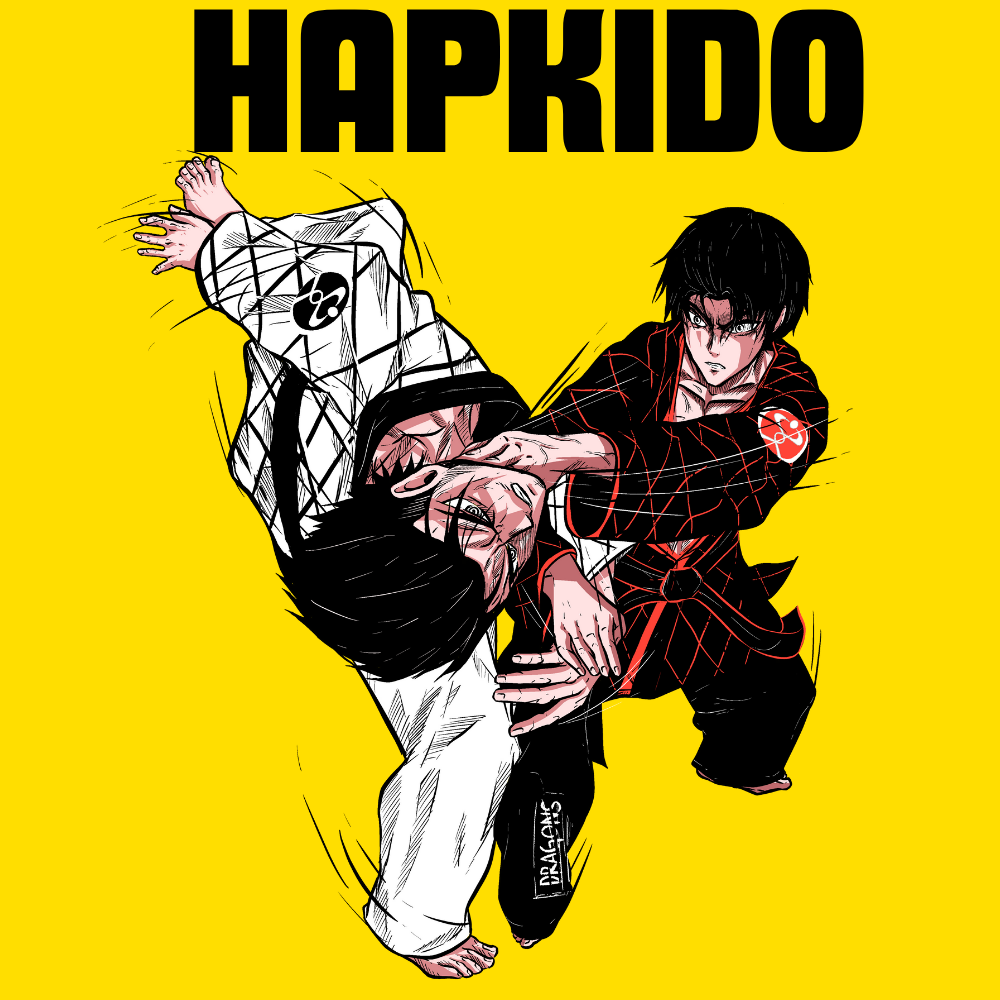
Unlike linear martial arts, Hapkido emphasizes circular movements. When an opponent attacks, the Hapkido practitioner moves in a circle, redirecting the attack's energy while simultaneously countering. This principle allows smaller practitioners to defeat larger, stronger opponents by using their own force against them.
Joint Lock Mastery
Hapkido is particularly renowned for its sophisticated joint locking techniques. Practitioners learn to manipulate joints in ways that cause pain and compliance without necessarily causing injury. These techniques are highly effective for law enforcement and security applications.
Kicking Techniques
While rooted in Japanese Aiki-jujutsu, Hapkido incorporated Korean kicking traditions, resulting in a unique blend:
- Low kicks to destabilize opponents
- Mid-level kicks to the body
- High kicks to the head
- Spinning and jumping kicks
- Kicks integrated with joint locks and throws
Weapons Training
Traditional Hapkido includes extensive weapons training:
- Cane (Ji Pang Ee): Walking stick techniques for self-defense
- Short Stick (Dan Bong): Pressure point striking and joint manipulation
- Sword (Gum): Traditional Korean sword techniques
- Staff (Bong): Long staff for distance control
- Rope (Pohl): Binding and restraining techniques
Belt System
Hapkido uses a colored belt ranking system similar to other Korean martial arts:
- White Belt - Beginner
- Yellow Belt
- Green Belt
- Blue Belt
- Red Belt
- Black Belt (1st Dan through 10th Dan)
Advancement requires demonstrating proficiency in techniques, forms, sparring, and philosophical understanding.
Different Styles and Organizations
As Hapkido spread, different styles emerged:
- Traditional Hapkido: Emphasizes joint locks and circular motion
- Combat Hapkido: Modernized for self-defense, removes high kicks and acrobatics
- Sin Moo Hapkido: Founded by Ji Han-Jae, emphasizes meditation and internal energy
- Kuk Sool Won: Related art emphasizing traditional Korean techniques
Law Enforcement and Military Applications
Hapkido's emphasis on control techniques makes it ideal for law enforcement and military use. Many police forces and military units worldwide have adopted Hapkido techniques for:
- Arrest and control procedures
- Weapon retention and disarming
- Crowd control
- Non-lethal force options
Self-Defense Philosophy
Hapkido's self-defense approach emphasizes:
- Awareness and prevention
- Appropriate response to threat level
- Control over destruction when possible
- Adaptability to various situations
- Use of environment and available objects
Training Methods
Hapkido training typically includes:
- Falling Practice (Nakbup): Safe falling and rolling techniques
- Partner Drills: Practicing techniques with cooperative partners
- Forms (Hyung): Choreographed sequences of techniques
- Sparring: Controlled practice with resistance
- Meditation: Developing mental focus and ki energy
- Conditioning: Building strength, flexibility, and endurance
Ki Development
Like other Korean martial arts, Hapkido emphasizes the development of "ki" (기) or internal energy. Practitioners learn breathing exercises, meditation, and specific techniques to cultivate and direct this energy for more powerful and efficient techniques.
Global Spread
Hapkido spread internationally in the 1960s-70s, particularly to the United States through Korean instructors and American servicemen stationed in Korea. Today, Hapkido is practiced worldwide with millions of practitioners across six continents.
Modern Applications
Contemporary Hapkido has adapted to modern needs:
- Women's self-defense programs
- Anti-bullying training for children
- Executive protection techniques
- Fitness and wellness programs
- Therapeutic applications for rehabilitation
Philosophy and Life Application
Beyond physical techniques, Hapkido teaches life principles:
- Harmony over conflict
- Adaptability in facing challenges
- Respect for all beings
- Continuous self-improvement
- Balance in all aspects of life
Legacy
Hapkido represents a successful synthesis of Japanese and Korean martial traditions, creating a comprehensive self-defense system that emphasizes control, efficiency, and harmony. Its principles of using an opponent's energy against them and maintaining fluidity in response to attacks have influenced many modern martial arts and self-defense systems.